
What is a cyanotype?
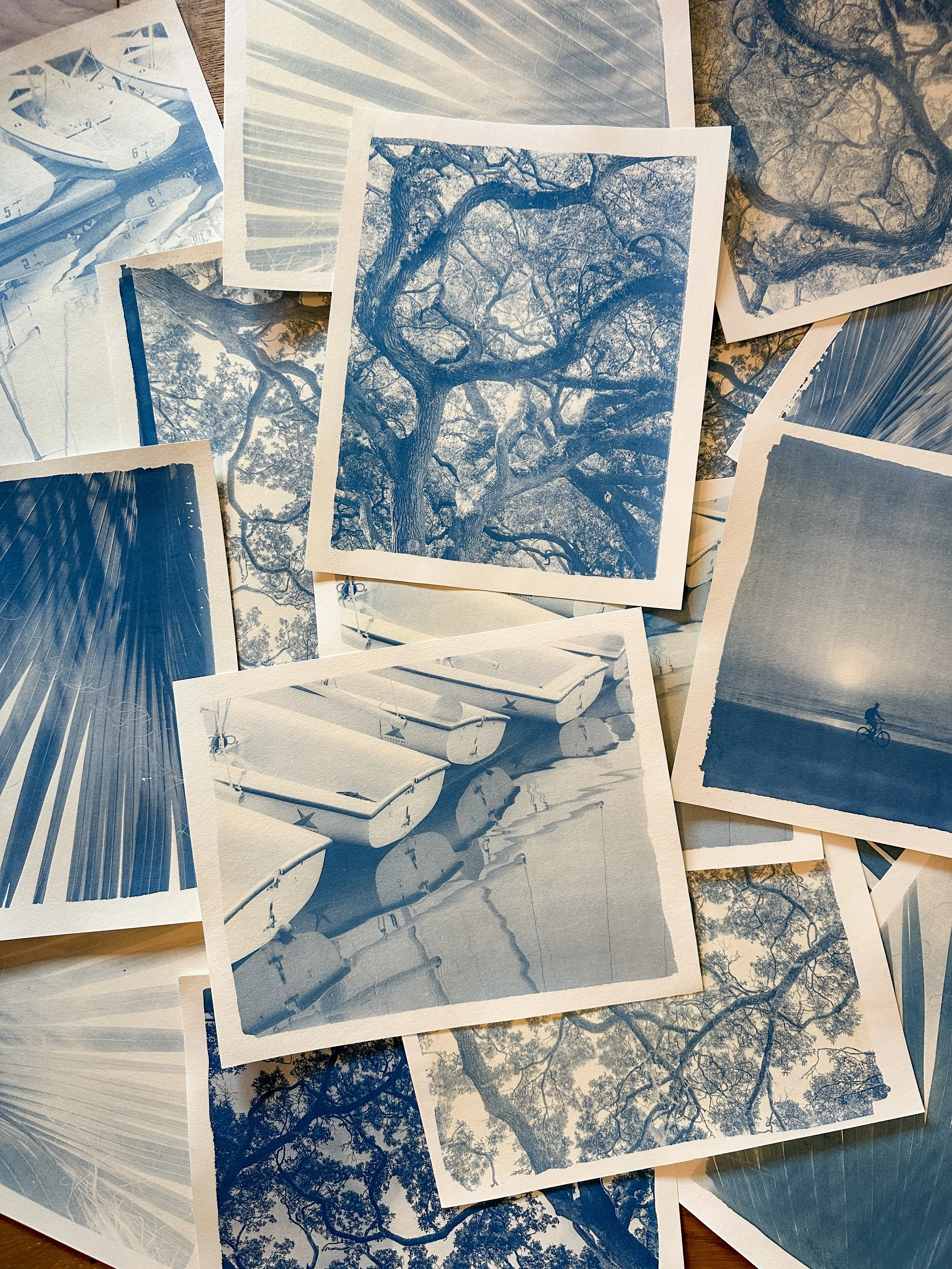
A cyanotype is a photographic print made by hand using a process known for its rich Prussian blue tones. It is one of the earliest photographic techniques and is still used today for the distinctive color, the handmade quality, and the subtle variation from print to print.
All of Paula’s cyanotypes begin with her own photographs. Rather than printing them digitally, she translates those images into blue using this traditional process. Some works remain purely blue and white, while others are further developed with hand-painted details.
How Cyanotypes Are Made
To make a cyanotype, a light-sensitive solution is brushed onto archival cotton rag paper by hand. Once it dries, the paper is exposed to sunlight with a photographic negative placed directly on top. Wherever the light reaches the coated paper, the image develops in deep Prussian blue.
After exposure, the print is rinsed in water, which stops the reaction and reveals the final image.
Because the paper is coated by hand and exposed using natural light, there are small differences every time. Brushstrokes may show, the edges may be irregular, and exposure can vary slightly. That is all part of the process, and part of what gives each cyanotype its character.
Why Each Cyanotype Is Unique
Even when two cyanotypes begin with the same photograph, they are never identical. Small variations in coating, exposure, and rinsing give each print slightly different tone, texture, and presence.
For that reason, cyanotypes are not mass-produced or printed on demand in the way digital prints are. Each one is made individually, and once a one-of-a-kind piece is sold, that exact print will not be repeated.
Why Blue Works So Well
One of the the best things about cyanotype is the blue. It is strong, but surprisingly easy to live with. Blue shows up everywhere in nature, and in many ways is the ultimate neutral…like a great pair of blue jeans. It works with a lot of colors, materials, and styles without disappearing into the room.
Questions about available work or commissions are always welcome.
Other frequent questions
-
No. Cyanotypes are works on paper and should be cared for the same way you would care for a photograph, watercolor, or other fine art on paper. Paula prints on archival cotton rag paper and recommends framing the work behind UV-protective glazing.
-
With proper care, cyanotypes are very stable. As with any work on paper, avoid prolonged direct sunlight. UV-protective glazing is recommended for framing.
-
A cyanotype can be framed like any other photograph or work on paper. It can be matted traditionally or float-mounted to show the brushed edges. Both work well; the choice mostly depends on the piece and the room.
-
Yes. Paula accepts a limited number of cyanotype commissions. If you have a photograph, place, botanical subject, or other idea in mind, get in touch.
-
Not exactly. Paula can return to the same photograph and make another cyanotype, but because each one is made by hand, it will never be identical to the one that sold.